WORLD LEADING INSIGHTS

International LEADERS Calling Market Crashes Years Ahead
Second to None, Anywhere...

'Warned 2000 tech slide; predicted 2008 meltdown in 2007. Forecasted 2020 global economic collapse in 2011, AND NOW- BY 2050 - THE MOTHER OF ALL CRASHES"

Featured Post

#TROUBLE AHEAD AS #ICE SHELF DEVASTATED IN #ANTARCTIC

 REUTERS Thinning Antarctic ice shelf finally crumbles after heatwave By  Isla Binnie March 25 (Reuters) - An East Antarctica ice shelf disi...

Inspire, Achieve, Success

Search This Blog

SAVE ON HOT STUFF

Showing posts with label bugonomics. Show all posts

Friday, April 24, 2015

TOP SECRET #ECB CHART - No Bees = No FOOD in Europe?

Nearly one in 10 wild bee species face extinction in Europe while the status of more than half remains unknown - IUCN report


Major threats to bees in Europe. Graphic: IUCN

The first-ever assessment of all European wild bee species shows that 9.2% are threatened with extinction, while 5.2% are considered likely to be threatened in the near future. A total of 56.7% of the species are classified as Data Deficient, as lack of experts, data and funding has made it impossible to evaluate their extinction risk. 
The assessment was published today as part of The IUCN European Red List of Bees and the Status and Trends of European Pollinators (STEP) project, both funded by the European Commission. It provides – for the first time – information on all 1,965 wild bee species in Europe, including their status, distribution, population trends and threats. Read More.

CAN WE SERVIVE WITHOUT BEES


Friday, April 18, 2014

No Bees = NO FOOD - More #Bugonomics

Bee crisis could cost billions in lost agricultural production across Australia, Senate inquiry hears

(The Advertiser) – Feral bees have been all but wiped out in South Australia, putting the state’s agricultural industry at risk.
The state now depends on about 60 beekeepers for domestic bees to pollinate crops after the feral population was hit hard by the Bangor and Ngarkat bushfires, among others.
As the bee flies - natural pollination by native bees is seriously threatened as numbers SA apiarist Leigh Duffield, who gave evidence to a Senate inquiry into the future of beekeeping, said bees in those areas were basically burnt out, and their feeding grounds destroyed.
“No bees, no food,” he said.
“About two-thirds of the food produced in Australia is dependent on pollination. For apples, pears, lucerne, almonds, it’s about 90 per cent.
“The whole community, the health of the whole community, is now very dependent on the wellbeing of about 60 commercial apiarists in Australia. We only generate $12 million from honey, but our add-on benefit is about half a billion.”
“As a consequence it is not possible to assess the level of threat posed to the beekeeping industry in Australia, but it would seem reasonable to project that should Varroa establish in Australia and reliance on managed pollination substantially increases, then CCD will become an increasingly important issue.”

Also A Global Problem 

Wednesday, November 20, 2013

Global Warming is Worse - Real Climate Scientists

 
RealClimate 
Twice as Warm

Real Climate Scientists Say Global Warming Much Worse

 Read More Here


Some Like It Hot! 

That was a great movie title with some fabulous stars, but it was never intended to be applied to how we set our global thermostat. Or maybe it has another meaning?  

From the outset one should realize that there are two distinct categories of scientist: Media-Scientists and Real-Scientists. The former are the ones you often see in  the media, on talk shows and print, promoting a favoured point of view that is consistent with those of their benefactors. Very little credibility can be given to these media hucksters for obvious reasons. Real-Scientists, however, labour quietly behind the scenes seeking little public attention for their work; being most happy with their quiet professional achievements and peer approvals. They do not significantly benefit in any other ways from their work, and hence are afforded a much higher degree of trust.

So that is why when these real climate scientist tell us that global warming is double what many  believed for the past fifteen years - we believe them. But we do not do so blindly and look to other corroborating evidence to confirm their assertion. Other supporting evidence includes rising sea levels, more wildfires and floods, extreme weather turbulence, animal migrations, declining insect populations and rapidly melting glaciers and icecaps. Almost overwhelming support!

On the other hand, we also recognize that measuring the global temperature is not so simple. It is a complex process and metric because of the numerous ranges and areas that need to be measured and observed.There is no one absolute measurement or device. Therefore, some form of mathematical averaging and modelling requiring assumptions are needed, but these are also  subjective and open to influence and change. Despite this shortcoming, the integrity of the Real-Scientists who perform these complex calculations is a substantial and positive over-riding persuasion in their favour.

Read the above-attached (linked ) RealScientist  report for yourself; read other source links, go over their site and think about what else supports the report's climate temperature assertion. Then draw your own conclusions.  We did. Things are much hotter than we thought. 

And Some Don't Like It Hot!


Dr Peter G Kinesa
November 20, 2013


Who Should we Believe?
Hmm...

RealClimate logo


Thursday, September 12, 2013

#BBC News - Climate Change Pictures

(Read More)

Woolly Mammoth

We Remember These Guys?

As they say, pictures can be worth a thousand words. So I will let them do the talking.

Dr Peter G Kinesa
September 12, 2013  


Who will remember?

TOP ECONOMIC GRAPH - USGS GROUNDWATER : There is No Fracking Water?


Annual groundwater withdrawal estimates by water-use class from the Death Valley regional flow system, 1913 through 1998. Graphic: USGS / San Juan et al., 2010

Imagine down the road one generation is going to have to decide between whether to use and spoil groundwater for fracking oil or irrigation and farming purposes, and thus food supply. Groundwater is a key ingredient in both processes. And looking at the above graph it is apparent that the amount being used for non-agricultural reasons has been rising over the past four decades, according to this USGS report. The full report is linked above for your study.

The other obvious concern that the chart brings out; how much groundwater is there? As the population and various commercial needs grow when does demand outstrip possible supply? Right now, we do not have or see any clear answers to these questions, but hopefully someone does have them before we reach that point. Then, of course, who will decide whether you eat or drive? Hmm...

So whether it's the extinction of pollinating bugs or the exhaustion of groundwater, it looks like farming is about to become much less productive in the years ahead, despite the growing number of mouths it will be expected to feed. And that's not even taking into account what effects may come from climate change - starting with less rainfall. 

One might add - so what's all the fracking excitement about?

Dr Peter G Kinesa
September 12, 2013 


You Decide!

Friday, September 6, 2013

MORE #BUGONOMICS - UK Bee Crisis!

(Read More)


Not Again?


One cannot stress enough the urgency of this systemic issue that has the potential to lead to wide-spread drops in food production. From butterflies to bees  this is not a problem that is localized to one city, nation or continent. And it goes without saying that the loss of these pollinators could lead to more than just a deep economic depression - the potential for famine, social unrest and geo-political instability comes attached.

A few weeks back Bugonomics may have been out of sight and out of mind, but it has hit the leading headlines of the international press with a vengeance, both in North America and Europe. We sense that the other continents are not immune to this issue, as well. 

More than the eloquence of Churchill will be required to bring the force needed to wrestle this almost invisible enemy to the ground. Let's hope that it may be contained to just a gathering storm!


Dr Peter G Kinesa
September 30th, 1938


"BUGS FOR OUR TIME"
September 30,1938


Thursday, September 5, 2013

#California Smoke Gets in Your Eyes


Smoke from the Rim Fire

NASA Satellite View

Earlier we posted an important climate economic graph reflecting the upward shift in temperatures in six California regions - 1950 to 2010. If there are any doubters out there who think that a warmer climate is not causing displacements and health hazards to human conditions then they are certainly missing the tides of what may come. Major wildfires such as Yosemite pose not only health and living hazards, but the economic costs associated with containment and prevention may become overwhelming for a State already struggling with its finances.

And the wildfire damage also leads to further erosion in the quality of top soil. This means when the rains do come the coastal mountains respond by covering the scenic PCH with tons of fallen earth. Again giving rise to more costs to be born as the  sequential consequences of a warming climate   

Furthermore, fears of fire triggered by the smallest ember could lead to stricter regulations on campfires, barbecues, fireworks and maybe even smoking of any sort.These regulations would also affect other industries, commerce and tourism. At this point, no one knows what to anticipate as the climate's rising temperatures makes many areas much dryer. 

For sure, if conditions persist, the State will not be able escape deep economic consequences in the years ahead. Adding another concern to our list of non-financial metrics.

Dr Peter G Kinesa
September 5, 2013


  "On a dark desert highway, cool wind in my hair
Warm smell of colitas, rising up through the air..
 Welcome to..."
Eagles, Lyrics Hotel California


Tuesday, September 3, 2013

Top Economic Graph "CALIFORNIA STEAMING"

(Read More)

Summertime (June-August) maximum (Tmax) and minimum (Tmin) temperatures have increased between 1950 and 2010 for each of California's six climate regions. Graphic: CalEPA / OEHHA 

Here again we can look at key non-financial metrics that dig deeper into the wealth of an economy. California is already plagued by financial woes as budgetary deficits have brought the state to the brink many times. It is dancing on thin ice and requires the environment and climate to co-operate, if there is any hope of repairing fiscal issues. Not likely, as these climate graphs indicate.

Since 1950, the min and max temperatures have been increasing in all six regions in the state. Warmer temperatures means more wildfires as well as poorer growing conditions for agriculture, a major export from the state. This also means the supply of water will become more critical to serve both local fire-fighting and agricultural needs. This can only mean higher costs that will get passed on to food production; in turn consumers.

So, with this in mind we should keep a focused eye on the number and size of wildfires given their far-reaching economic implications within and outside the state. Hopefully, the Santa Ana winds don't make surfers and surfing also a past-time similar to those of California sun-bathers from millions of years ago.

Or, I wish they ought to be... 

Dr Peter G Kinesa
September 4, 2013


Land of the Endless Summer?


Friday, August 30, 2013

#Bugonomics - What Butterflies Too?

(Read More)

Visit this article's slideshow to view the varied beauty of this species

The Common Blue (Polyommatus icarus)


Imagine a world without butterflies - and poems, and romance, and dreams that touch the heart of destiny..

Since 1990, the EU butterfly population has been on the decline with implications that affects crops and resultant food production. And a 50% drop in grassland butterflies is significant because it is a key indicator of the state of bio-diversity. Remember  no bugs - no economy - and then food becomes an issue.

Not being in a position to substantiate these reports, we however sense there is some truth to the issue by virtue of many corroborations. Consider all the evidence regarding climate change as well; it becomes straightforward to conclude that as the climate swaggers about, other variables are sure to be effected. Bugs are no exception.

All this gets back to one principle of "Bugonomics" insofar-as non-financial metrics are critical indicators of macro-economic well-being and better identify concerns that would seriously impair economic viability. Just like a doctor who must go beyond the window-dressing by probing for underlying concerns with modern scientific tools.

In this case, the demise of butterflies and other bugs points us towards an understanding of the deeper causes. These causes are tied to bio-chemical farming technology used to enhance crop production to feed ever-expanding global populations whose growth has been supported and exacerbated by fossil fuels along with neo-classical economic theory. A theory that blindly encourages growth with no regard for its consequences.

At this juncture, we may falsely believe that we are winning the  "Bug Battle", but in the end the champions are sure to be different. And that should bug (sic) a lot of us!  

Dr. Peter G Kinesa  
August 30, 2013


We are the Champions!


Sunday, August 25, 2013

PLATINUM WEALTH PARTNERS -Jim Rogers #Gold #Commodities #USDollar

PLATINUM WEALTH PARTNERS:
Week Ended, August 25, 2013


DR. PETER G. KINESA'S
INTERNATIONAL INSIGHTS
"PLATINUM WEALTH PARTNERS"


VISIT OUR WEBSITE
PLATINUM WEALTH PARTNERS
www.pwa2100.blogspot.com


Does this mean we should land on the moon again for bargains? Folks could be waiting there right now looking for our business. Who, we wonder?

Commodity prices are ready to shoot upwards whether there is a war in Syria or any big event somewhere else on the planet. Syria is somewhat irrelevant in this regard as markets are poised more on fundamentals to lift skyward.

The world is more fragile today than it was twenty years ago for obvious reasons. More people, fewer resources and wider geo-political tensions and instability. For more worries you may add in climate change, wildfires, water supplies and worst - fewer and fewer pollinating bugs. And that's the war we are really losing sleep over.

Bottom Line: Anyday, anything, or anytime - LIFT OFF ALICE!

PLATINUM WEALTH PARTNERS
First Financial Insights
August 24, 2013

To the Moon...


Just cannot see eye to eye with Jim on the collapse of the US dollar, albeit the financial calamity is more or less a hangover from the 2008 Meltdown and remains plausible. Indeed we had  forecasted such a collapse two years back, by 2020. Bonds yes; but a currency short is fraught with too many pitfalls.

There are many reasons behind the likely stability embedded in the US dollar in such times. Two are big ones. One,  it will simply win by default because other currencies that are competitive, in any significant way, should be that much worse off in the turbulent economic times ahead. Remember, the US is a Hegemony with about 60 -70% of the world's resources and economies within its influences and/or control. There is little else in terms of a viable surrogate exchange media that could handle the global financial volume and liquidity needs as well. Former communist countries have huge credibility issues to overcome to garner any trust for this role.

But most importantly - they have bigger GUNS! In the end, that may be all that matters. 

PLATINUM WEALTH PARTNERS
First Financial Insights
August 22, 2013 


Pentagon 2020 Outlook:
 Continues to See Strong US Dollar


(Read More)

International investment adviser Marc Faber is author of The Gloom, Boom & Doom Report. (SHERWIN CRASTO/SHERWIN CRASTO/REUTERS)

"BUY GOLD???"


While we have long held a position that in the long-run there is no legitimate or logical reason based on sequential forward events, and both historical asset-class performance and purchasing power losses over the past thirty-three years to own this object, yet this psychotic placebo continues to attract the attention of speculators.  Nouriel Roubini had candidly referred to it as a "barbaric relic" - his kind diplomacy is respected. 

So why do promoters such as Dr Doom continue with there promotions despite all this? We can presume that they understand the psychosis of small investors attracted to such a cure all placebo and operate to take advantage of their fantasy. The above purchase of Sprott affirms the possibility of such a tactic by promoters. 

But the most important issue is not whether to buy or sell this object - the real issue is disclosure. That is will the promoters advise the public of subsequent sales before they are effected or will they cleverly front-run them in various de facto forms ahead of small investors, underneath the radar of a complex myriad of international rules, laws and regulations?

Funny thing, we really don't expect  answers to these questions any time soon.


PLATINUM WEALTH PARTNERS
First Financial Insights 
August 20, 2013  

Just Keeping them ... 


Tuesday, August 20, 2013

#TIME - Bugonomics - Now it's Honey Bees!

(Read More)

TIME magazine cover for the 19 August 2013 issue: ' A world without bees'. Photo: Hannah Whitaker / TIME


A few weeks back we highlighted a graph illustrating the decline of wildlife and bugs in the UK, since 1968 - it was our economic graph of the week. Wherein the term "Bugonomics" was also coined for posterity. Our point then and still is - Economists place too much emphasis on the abstract measures of wealth, such as GDP and CPI, and not enough on the key metrics associated with the real physical wealth of the planet. Blame them all, right back to Adam Smith. 

Compare this to your doctor's assessment based on how well you are dressed during appointments - not on any other diagnostic measures that probe into the physical state of your body. It would be a small consolation being well-dressed for your premature funeral. See the point? That's why we believe the field of "Bugonomics" is destined to replace Keynesian and other neo-classical theories. It is clearly more scientific.


So we applaud TIME magazine's article on "Honey Bees" for bringing forward this salient economic issue. For it drives home the idea that without these bees our way of life and existence may be in jeopardy. And that's just one bug! Unfortunately, we can only link you to the beginning of the article, but it should be enough to get the point across. 


In summary, we emphasize that bugs can go on when our economies don't; but our economies would cease if bugs should ever perish. In fact, we speculate matters will be much worse for us if they do. By the way, all along the economy would be growing at a robust pace, and we should all look pretty good too!


So when will Harvard, MIT, Oxford or Princeton ask, "Why don't we have someone teach a "Bugonomics" course this semester, instead of that old school theory?" Hopefully, for our collective sake, they are searching for applicants at this very moment. 


Dr Peter G Kinesa 

August 20,2013

P.S. It should not take a rocket scientist to figure out that certain "non-financial measures" are better determiners of macro-economic wealth - however, it remains unthinkable that economics should be cluttered by the blathering of scientific protocols. So far.    
  

WELL DRESSED

Flowers? I can't even fly Doc!

Wednesday, August 7, 2013

NASA "Our planet is evaporating" (Video)

(More)


"LET ME KNOW WHAT LIFE IS LIKE ON JUPITER AND MARS... IN OTHER WORDS"


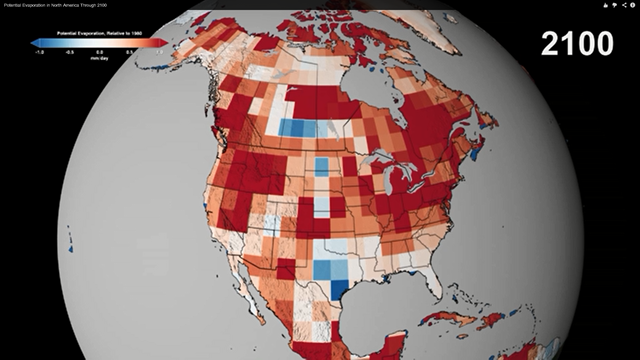
For a moment, let's not debate what the cause is behind the increased trend in wildfires and lands now exposed to this threat. Rather lets acknowledge that this trend is not good because not only of the explicit life-threatening dangers posed, but also because it places arable farmlands and wildlife in greater jeopardy. This is not good economics by any means. (Remember, Bugonomics last month?)

Many years ago, CPA firms would claim their advisory leadership advantage and unique value proposition was through "getting behind the financial statements numbers". Perhaps economists and policy-makers should steal a page from the CPAs' slogans book and get behind the GDP numbers - because when they do, they should discover that real economic capacities are burning up or evaporating. These are the physical capacities that will drive the GDP numbers of tomorrow. Neat idea?

Maybe this same approach could have perhaps been helpful with urban management too - Detroit, New Orleans, Newark and so forth and thus slowing the evaporation of such centres. 

Hmm - "getting behind the numbers" - it has a catchy ring to it.  
  

Dr Peter G Kinesa
August 7, 2013


Satellite photos: Terra and Aqua

Projected increase in potential evaporation through the year 2100, relative to 1980, based on the combined results of multiple climate models. The maximum increase across North America is about 1 mm/day by 2100. This concept, potential evaporation, is a measure of drying potential or 'fire weather'. An average increase of 1 mm/day over the whole year is a big change, one we can put in specific terms: We consider a 1 mm/day increase in PE to be an 'Extreme' event for fires, something like 2012 in Colorado. By these projections, fire years like 2012 would be the new normal in regions like the western US by the end of the 21st century. Graphic: NASA

Motivate, Inspire, Positive