WORLD LEADING INSIGHTS

International LEADERS Calling Market Crashes Years Ahead
Second to None, Anywhere...

'Warned 2000 tech slide; predicted 2008 meltdown in 2007. Forecasted 2020 global economic collapse in 2011, AND NOW- BY 2050 - THE MOTHER OF ALL CRASHES"

Featured Post

#TROUBLE AHEAD AS #ICE SHELF DEVASTATED IN #ANTARCTIC

 REUTERS Thinning Antarctic ice shelf finally crumbles after heatwave By  Isla Binnie March 25 (Reuters) - An East Antarctica ice shelf disi...

Inspire, Achieve, Success

Search This Blog

SAVE ON HOT STUFF

Showing posts with label #climatechange. Show all posts

Friday, July 30, 2021

BIGGER FISH TO FRY - Comments The New York Times , July 26, 2021

 BIGGER FISH TO FRY


Pandemics are a mere pimple on the back of an elephant when compared to the possibility of the Arctic Melting and causing a Blue Ocean Event later this year - which in turn could cause a rise in temperatures of 6 degrees C or more.


This would exacerbate the climate chaos and extreme weather patterns already being experienced and in all likelihood lead to the extinction of all vertebrate animals on the planet. This abrupt change in climate compares to that experienced during the Permian extinction when 90% of life on Earth perished. In short, we have much bigger fish to fry - much more than pimples on an elephant's back.

Moreover, we should not lose sight of the looming energy and resource crisis that is bound to take hold in the next decade. Once the fossil fuels and other critical minerals are depleted there is no way for society to feed its huge energy appetite - economic and social collapse are imminent just as forecasted in 1972 by 27 researchers at MIT in their best selling book - 30 million copies - Limits to Growth.

Hence if the Arctic melt and Blue Ocean Event does not cause our collapse; then Mother Nature has a backstop of depleting all our critical energy and mineral resources in the not too distant future. One might say - Mother Nature Bats Last.


In summary, it's time to stop fretting about relatively little pimples and to take a perspective of the whole elephant for what it is and says - we have MUCH BIGGER fish to fry...

T A McNeil
CEO Founder
First Financial Insights Inc.


Handle - Greta Prize Nobel
Published The New York Times, July 26, 2021

Friday, March 8, 2019

#UN REPORT FEARS GLOBAL #FAMINE AS FOOD SUPPLIES RAPIDLY DWINDLE


Plants, insects and organisms crucial to food production in steep decline, says UN


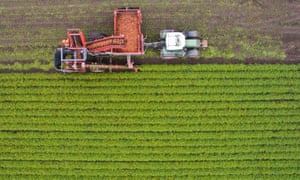
Harvesting of organic carrots in Germany.

Organic carrot harvest in Germany. Organic agriculture makes up just 1% of global farmland. Photograph: Julian Stratenschulte/EPA


World's food supply under 'severe threat' from loss of biodiversity


The world’s capacity to produce food is being undermined by humanity’s failure to protect biodiversity, according to the first UN study of the plants, animals and micro-organisms that help to put meals on our plates.
The stark warning was issued by the Food and Agriculture Organisation after scientists found evidence the natural support systems that underpin the human diet are deteriorating around the world as farms, cities and factories gobble up land and pump out chemicals.
Over the last two decades, approximately 20% of the earth’s vegetated surface has become less productive, said the report, launched on Friday

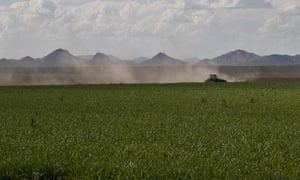
Monoculture.
 Although the world is producing more food than in the past, it is relying on ever-expanding monocultures. Photograph: ZUMA/REX/Shutterstock

It noted a “debilitating” loss of soil biodiversity, forests, grasslands, coral reefs, mangroves, seagrass beds and genetic diversity in crop and livestock species. In the oceans, a third of fishing areas are being overharvested.
Many species that are indirectly involved in food production, such as birds that eat crop pests and mangrove trees that help to purify water, are less abundant than in the past, noted the study, which collated global data, academic papers and reports by the governments of 91 countries.
Image result for the guardian logo


GLOBAL FOOD CRISIS
LEARN MORE


Follow Me By Email

Image result for subscribe email icon gif

Image result for doctor peter g kinesa


Did you enjoy this post? Sign up for my daily digest to get the TOP daily  posts, articles, reports and studies, like this Monday to Friday.

Disclaimer: The facts and opinions expressed within this article are the personal opinions of the author.  Dr.Peter G Kinesa's Digest does not assume any responsibility or liability for the accuracy, completeness, suitability, or validity of any information in this article or video.

Thursday, March 7, 2019

#OVERPOPULATION LEADS TO UNSUSTAINABLE #ENERGY FUTURE


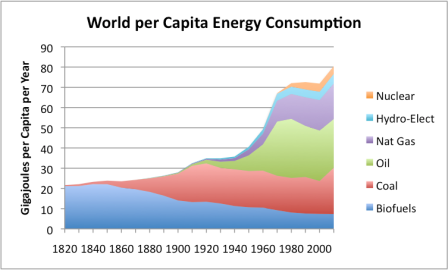
World Energy Consumption Since 1820 in Charts


Figure 1 (above) shows the huge increase in world energy consumption that has taken place in roughly the last 200 years. This rise in energy consumption is primarily from increased fossil fuel use. Below is the population increase.

Image result for population increase since 1820

With energy consumption rising as rapidly as shown in Figure 1, it is hard to see what is happening when viewed at the level of the individual. To get a different view, Figure 3 shows average consumption per person, using world population estimates by Angus Maddison.


On a per capita basis, there is a huge spurt of growth between World War II and 1970. There is also a small spurt about the time of World War I, and a new spurt in growth recently, as a result of growing coal usage in Asia.


LEARN MORE

POPULATION GROWTH IS UNSUSTAINABLE


Follow Me By Email

Image result for subscribe email icon gif

Image result for doctor peter g kinesa


Did you enjoy this post? Sign up for my daily digest to get the TOP daily  posts, articles, reports and studies, like this Monday to Friday.

Disclaimer: The facts and opinions expressed within this article are the personal opinions of the author.  Dr.Peter G Kinesa's Digest does not assume any responsibility or liability for the accuracy, completeness, suitability, or validity of any information in this article or video.

Wednesday, March 6, 2019

#NASA: Dangerous #Methane Spike Tied to Oil and Gas


Scientists think they can now better explain the recent surge in methane levels seen in the Earth's atmosphere.


Australian bushfire

New NASA Study Solves Climate Mystery, Confirms Methane Spike Tied to Oil and Gas


Over the past few years, natural gas has become the primary fuel that America uses to generate electricity, displacing the long-time king of fossil fuels, coal. In 2019, more than a third of America's electrical supply will come from natural gas, with coal falling to a second-ranked 28 percent, the Energy Information Administration predicted this month, marking the growing ascendency of gas in the American power market.

But new peer-reviewed research adds to the growing evidence that the shift from coal to gas isn't necessarily good news for the climate.

A team led by scientists at NASA's Jet Propulsion Laboratory confirmed that the oil and gas industry is responsible for the largest share of the world's rising methane emissions—which are a major factor in climate change—and in the process the researchers resolved one of the mysteries that has plagued climate scientists over the past several years.

Image result for methane climate change and our uncertain future

Missing Methane

That mystery? Since 2006, methane emissions have been rising by about 25 teragrams (a unit of weight so large that NASA notes you'd need more than 200,000 elephants to equal one teragram) every year. But when different researchers sought to pinpoint the sources of that methane, they ran into a problem.


LEARN MORE

DRAMATIC CLIMATE CHAOS FROM METHANE


Tuesday, March 5, 2019

Climate Worsens Plight of #Migratory #Birds


New studies: Migratory birds face multiple threats from climate change


Whooping Crane

Whooping Crane at Goose Island State Park, Aransas County, Texas.

By Melissa Gaskill
Texas Climate News

Some two billion birds migrate over the Gulf Coast each spring. The highest traffic occurs in Texas, with as many as 26,000 birds per kilometer of airspace each night, 5.4 times the number detected along the coast from Louisiana to Florida.
Several recent studies suggest that climate change could make the trip tougher for many of these birds, with shifts in the arrival of spring affecting their ability to fuel up for migration.
Both spring and fall migrations could be affected by changes in food availability and other conditions along the route and at the birds’ ultimate destinations, and in fall, birds could face stronger headwinds.

Related image

Spring now arrives earlier in 76 percent of all U.S. National Wildlife Refuges, according to a study in PLOS One, which could put birds out-of-sync with food availability and appropriate seasonal changes during their journey.
LEARN MORE 

Follow Me By Email

Image result for subscribe email icon gif

Image result for doctor peter g kinesa


Did you enjoy this post? Sign up for my daily digest to get the TOP daily  posts, articles, reports and studies, like this Monday to Friday.

Disclaimer: The facts and opinions expressed within this article are the personal opinions of the author.  Dr.Peter G Kinesa's Digest does not assume any responsibility or liability for the accuracy, completeness, suitability, or validity of any information in this article or video.

Motivate, Inspire, Positive