WORLD LEADING INSIGHTS

International LEADERS Calling Market Crashes Years Ahead
Second to None, Anywhere...

'Warned 2000 tech slide; predicted 2008 meltdown in 2007. Forecasted 2020 global economic collapse in 2011, AND NOW- BY 2050 - THE MOTHER OF ALL CRASHES"

Featured Post

#TROUBLE AHEAD AS #ICE SHELF DEVASTATED IN #ANTARCTIC

 REUTERS Thinning Antarctic ice shelf finally crumbles after heatwave By  Isla Binnie March 25 (Reuters) - An East Antarctica ice shelf disi...

Inspire, Achieve, Success

Search This Blog

SAVE ON HOT STUFF

Showing posts with label deforestation. Show all posts

Friday, April 10, 2015

#Santa Worried About Severe #Christmas Tree Shortages - #Northpole Daily Times


Tree Cover Loss Spikes In Russia and Canada, Remains High Globally  


<p>Click to enlarge.</p>


New, high-resolution satellite-based maps released today by the University of Maryland and Google on Global Forest Watch, a partnership of over 60 organizationsconvened by the World Resources Institute, reveal a significant recent surge in tree cover loss largely in Russia and Canada during 2013. There is also some good news, with a slowing of tree cover loss in Indonesia, though rates of loss continue a troubling rise across the tropics as a whole. These 2013 data are the first annual update to the influential “High-Resolution Global Maps of 21st-Century Forest Cover Change” published in Science, and are the latest globally consistent estimates of tree cover loss available.


So what do the data say? Much analysis remains to be done, but here are five immediate highlights: Read More. 

North Pole Is Scrambling To Work With World Powers For Solution 


Wednesday, April 8, 2015

SAO PAULO - #Brazil - STILL DRY DESPITE RECORD RAINS


SAO PAULO STILL DRY DESPITE RECORD RAINS

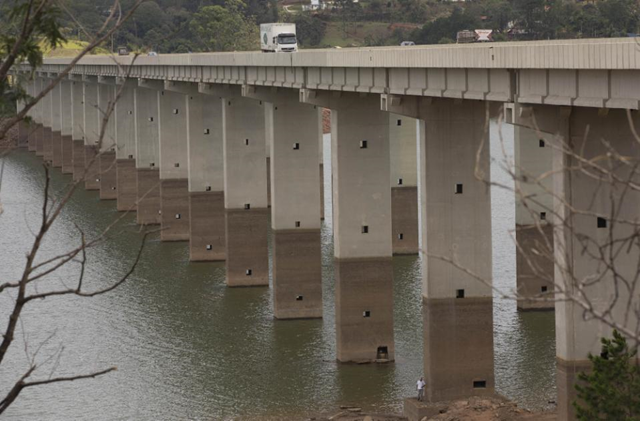
In this 29 January 2015 file photo, a bridge's columns are marked by the previous water line over the Atibainha reservoir, part of the Cantareira System that provides water to the Sao Paulo metropolitan area, in Nazare Paulista, Brazil. In 2015, Brazil's biggest city recorded its rainiest March since 2008, but the worst drought in more than 80 years has left reservoir levels critically low, and water experts fear that strict water rationing may still loom for Sao Paulo as it enters the April-September dry season. Photo: Andre Penner / AP Photo


By Stan Lehman 
2 April 2015
SÃO PAULO (Associated Press) – Brazil's biggest city has recorded its rainiest March since 2008, but the worst drought in more than 80 years has left reservoir levels critically low and water experts fear that strict water rationing may still loom for São Paulo as it enters the April-September dry season.
The crucial Cantareira water system, which provides water to about 6 million of the 20 million in the metropolitan area, was still only about one-fifth full as the dry season began.
Authorities already have imposed water-saving measures, including cut rates for people who limit usage, reduced pressure in water lines during off-peak hours and de facto rationing: some areas receive water only half the day.
Environment Minister Izabella Teixeira said this week that those programs must be expanded, and the government is preparing "a rational water-use program, given the end of the rainy season." She offered no details.
But some think that may not be enough.
Mario Thadeu Leme de Barros, head of the University of São Paulo's hydraulic engineering and environmental department, said existing measures, combined with the transfer of water among reservoirs, "will hopefully allow us to reach the end of the year with the mini-rationing that exists."
He also called for the use of more efficient appliances, the use of wastewater and better detection of leaks in a system that loses more than 30 percent of its water to leaks.
"But we cannot discard the possibility of more harsh water rationing measures should we be hit with an even worse drought during the coming dry season," he said.
Moody's Investors Service warned last month that water rationing looks increasingly likely, adding, "Overall, mandatory federal or state water rationing would worsen Brazil's already sluggish economic growth."
In March, São Paulo, received 8.13 inches (206.5 millimeters) of rain, 16 percent above the average, boosting the level of the Cantareira system from 5 percent to nearly 19 percent of its capacity, the water utility Sabesp said Thursday on its website.
The other five systems were at 23 percent to 97 percent of capacity as the dry season started.

Time For A New Rain Dance


Friday, June 13, 2014

BIG Oil Ravages #Amazon National Park


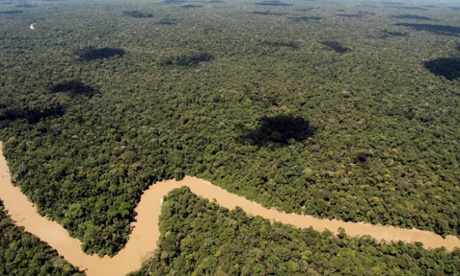
Aerial view of activists in Ecuador's Yasuní national park spelling 'Vive Yasuní' with their bodies. Photo: Progreso SemanalEcuador signs permits for oil drilling in Amazon's Yasuni national park

Companies could start extracting oil underneath key biodiversity reserve on Earth by 2016


By Adam Vaughan   


Yasuni national park
(theguardian.com) – Drilling for oil in a part of the Amazon rainforest considered one of the most biodiverse hotspots on the planet is to go ahead less than a year after Ecuador's president lifted a moratorium on oil drilling there.
Last August, Rafeal Correa scrapped a pioneering scheme, the Yasuní Ishpingo-Tambococha-Tiputini (ITT) initiative, to keep oil in the ground under a corner of the Yasuní national park in return for donations from the international community.

He said only $13m (£8m) of the $3.6bn goal had been given, and that "the world has failed us", giving the green light to drilling.

On Thursday, environment minister, Lorena Tapia, said permits for drilling had been signed for the 6,500-square-mile reserve, known as block 43, and oil production might begin as soon as 2016.

The permits allow Petroamazonas, a subsidary of the state oil company, to begin construction of access roads and camps to prepare for drilling.

Esperanza Martinez, an environmental activist in Ecuador, was quoted in a leading national daily as saying Petroamazonas had a bad record on oil spills and it could not be trusted to drill safely in the Yasuní-ITT.

Earlier this month, Ecuador's government rejected a petition calling for abandoning plans for drilling in the area, saying the organisers had failed to get enough signatures to trigger a national referendum.

The petition's backers, YASunidos, accused the government of fraud after only 359,762 signatures of around 850,000 submitted were deemed genuine – the threshold for forcing a referendum is 583,323.


Read More


Can trees survive without Man? 
Can Man survive without...

SHOCKING!


Motivate, Inspire, Positive