WORLD LEADING INSIGHTS

International LEADERS Calling Market Crashes Years Ahead
Second to None, Anywhere...

'Warned 2000 tech slide; predicted 2008 meltdown in 2007. Forecasted 2020 global economic collapse in 2011, AND NOW- BY 2050 - THE MOTHER OF ALL CRASHES"

Featured Post

#TROUBLE AHEAD AS #ICE SHELF DEVASTATED IN #ANTARCTIC

 REUTERS Thinning Antarctic ice shelf finally crumbles after heatwave By  Isla Binnie March 25 (Reuters) - An East Antarctica ice shelf disi...

Inspire, Achieve, Success

Search This Blog

SAVE ON HOT STUFF

Showing posts with label nature. Show all posts

Monday, June 16, 2014

#Oregon Stars Are Dying - No More Twinkle, Twinkle...

Sea star disease epidemic surges in Oregon, local extinctions expected


 Contact: David Stauth, 541-737-0787; Kristen Milligan, 541-737-8862


CORVALLIS, Oregon (OSU) – Just in the past two weeks, the incidence of sea star wasting syndrome has exploded along the Oregon Coast and created an epidemic of historic magnitude, one that threatens to decimate the entire population of purple ochre sea stars.

Prior to this, Oregon had been the only part of the West Coast that had been largely spared this devastating disease.


A dying sea star. The leg of this purple ochre sea star in Oregon is disintegrating, as it dies from sea star wasting syndrome, 16 May 2014. Oregon had been the only part of the West Coast that had been largely spared this devastating disease. Photo: Elizabeth Cerny-Chipman / Oregon State University / flickr
The ochre sea star, which is the species most heavily affected by the disease in the intertidal zone, may be headed toward localized extinction in Oregon, according to researchers at Oregon State University who have been monitoring the outbreak. As a “keystone” predator, its loss could disrupt the entire marine intertidal ecosystem.

Researchers say this is the first time that die-offs of sea stars, more commonly known as starfish, have ever been identified at one time along such a wide expanse of the West Coast, and the sudden increase in Oregon has been extraordinary.
The best information is from the intertidal zone, which is easier to access for monitoring. In this area, less than 1 percent of the ochre sea stars in Oregon were affected in April, and only slightly more than that by mid-May.


Baffling Scientists?
Watch!


Today, an estimated 30-50 percent of the Oregon populations of this sea star species in the intertidal zone have the disease. The highest losses are at Fogarty Creek, where about 60 percent are affected. Researchers project that the epidemic will intensify and, at some sites, nearly 100 percent of the ochre sea stars could die.


Read More


"Say Dad, did you hear the news about Oregon?"
"Very sad, son"


Add caption

Friday, June 13, 2014

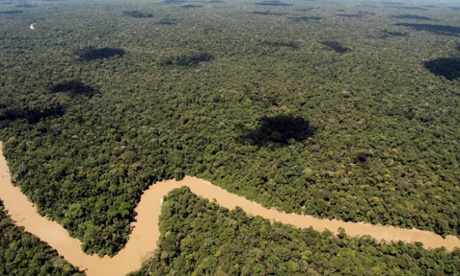
BIG Oil Ravages #Amazon National Park


Aerial view of activists in Ecuador's Yasuní national park spelling 'Vive Yasuní' with their bodies. Photo: Progreso SemanalEcuador signs permits for oil drilling in Amazon's Yasuni national park

Companies could start extracting oil underneath key biodiversity reserve on Earth by 2016


By Adam Vaughan   


Yasuni national park
(theguardian.com) – Drilling for oil in a part of the Amazon rainforest considered one of the most biodiverse hotspots on the planet is to go ahead less than a year after Ecuador's president lifted a moratorium on oil drilling there.
Last August, Rafeal Correa scrapped a pioneering scheme, the Yasuní Ishpingo-Tambococha-Tiputini (ITT) initiative, to keep oil in the ground under a corner of the Yasuní national park in return for donations from the international community.

He said only $13m (£8m) of the $3.6bn goal had been given, and that "the world has failed us", giving the green light to drilling.

On Thursday, environment minister, Lorena Tapia, said permits for drilling had been signed for the 6,500-square-mile reserve, known as block 43, and oil production might begin as soon as 2016.

The permits allow Petroamazonas, a subsidary of the state oil company, to begin construction of access roads and camps to prepare for drilling.

Esperanza Martinez, an environmental activist in Ecuador, was quoted in a leading national daily as saying Petroamazonas had a bad record on oil spills and it could not be trusted to drill safely in the Yasuní-ITT.

Earlier this month, Ecuador's government rejected a petition calling for abandoning plans for drilling in the area, saying the organisers had failed to get enough signatures to trigger a national referendum.

The petition's backers, YASunidos, accused the government of fraud after only 359,762 signatures of around 850,000 submitted were deemed genuine – the threshold for forcing a referendum is 583,323.


Read More


Can trees survive without Man? 
Can Man survive without...

SHOCKING!


Wednesday, May 21, 2014

IT'S ALL OVER! #Nature is Dying

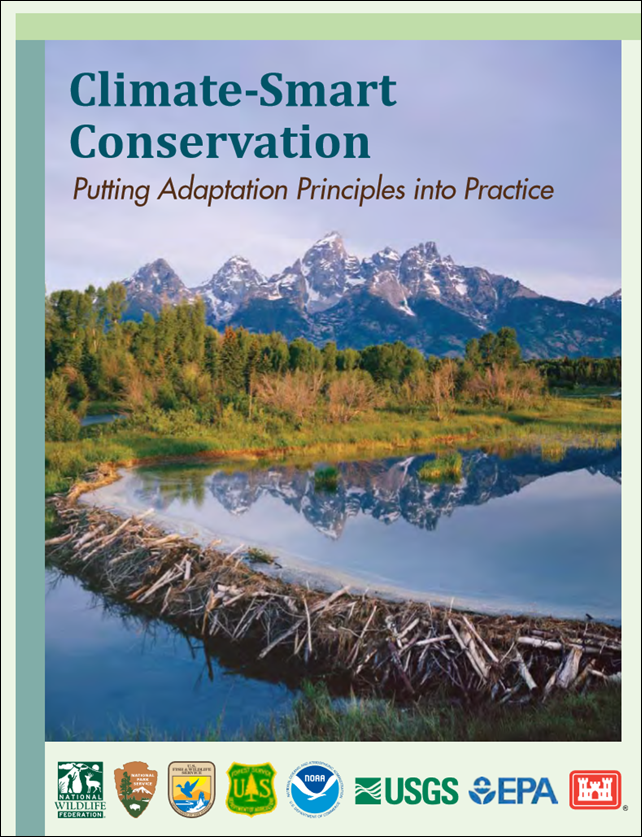
Cover of the National Wildlife Federation report, 'Climate-Smart Conservation', 2014. Photo: National Wildlife Federation

Impossible to Conserve Nature As Is, Thanks to Climate Change


A U.S. government-backed guide for land managers says global warming requires a fundamental shift in conservation


By Elizabeth Harball and ClimateWire


conservation
(Scientific American) – When President Theodore Roosevelt visited the Grand Canyon in 1903, he famously admonished the attending crowd to avoid meddling with the landscape. "Leave it as it is. You cannot improve on it," he said. 

True to Roosevelt's message, America's conservationists have since focused on maintaining the status quo, or at least restoring ecosystems to their natural state.

But due to the growing impacts of climate change, this can no longer continue, according to a new guide for land managers backed by multiple state and federal agencies.

"Addressing the growing threats brought about or accentuated by rapid climate change requires a fundamental shift in the practice of natural resource management in conservation," states the document, released yesterday by the National Wildlife Federation in partnership with the National Park Service, U.S. EPA, the National Oceanic and Atmospheric Administration, the U.S. Geological Survey and several other federal agencies and nongovernmental organizations.

"While managers traditionally have looked to the past for inspiration, increasingly we will be faced with future conditions that may have no historical analogs," it states.


The guide is intended to demystify climate adaptation for habitat and wildlife managers. It provides a step-by-step process evaluating how ecosystems may be vulnerable to climate change and how conservation goals might be altered for the best possible outcome.


‘No longer possible’ to maintain nature's status quo


Read More


And More Video


Motivate, Inspire, Positive