WORLD LEADING INSIGHTS

International LEADERS Calling Market Crashes Years Ahead
Second to None, Anywhere...

'Warned 2000 tech slide; predicted 2008 meltdown in 2007. Forecasted 2020 global economic collapse in 2011, AND NOW- BY 2050 - THE MOTHER OF ALL CRASHES"

Featured Post

#TROUBLE AHEAD AS #ICE SHELF DEVASTATED IN #ANTARCTIC

 REUTERS Thinning Antarctic ice shelf finally crumbles after heatwave By  Isla Binnie March 25 (Reuters) - An East Antarctica ice shelf disi...

Inspire, Achieve, Success

Search This Blog

SAVE ON HOT STUFF

Showing posts with label acidification. Show all posts

Monday, April 20, 2015

#Ocean Acidification Spells Extinction Backwards


Acidic Oceans

Implicated in Earth's Worst Mass 

EXTINCTION

WASHINGTON 

Commercial fishermen and other mariners form the words ''Acid Ocean'' during an event held to spread the message of saving the oceans from acidification caused by fossil fuel emissions, in Homer, Alaska, in this file photo taken on September 6, 2009. REUTERS/Lou Dematteis

(Reuters) - It is one of science's enduring mysteries: what caused the worst mass extinction in Earth's history. And, no, it is not the one that wiped out the dinosaurs.
Scientists said on Thursday that huge amounts of carbon dioxide spewed from colossal volcanic eruptions in Siberia may have turned the world's oceans dangerously acidic 252 million years ago, helping to drive a global environmental calamity that killed most land and sea creatures.


The researchers studied rocks in the United Arab Emirates that were on the seafloor at the time and contained a detailed record of the changing ocean conditions at the end of the Permian Period. Read More.

Earth's Mass Extinctions 
"NOT "
Extraordinary Events! 
Image result for the sixth extinction timelines

Thursday, April 16, 2015

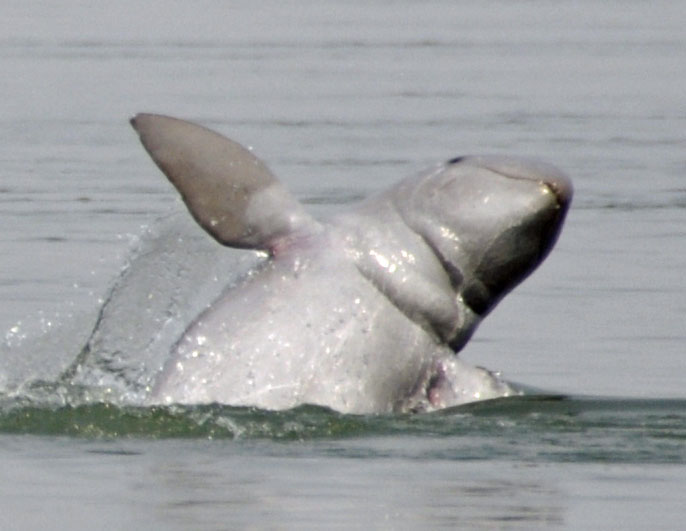
FIVE LEFT ON EARTH - Beautiful South Asian Dolphins

Dolphin's Death Leaves Only Five of Her Kind


The recent death of one of the remaining six Irrawaddy river dolphins in the Mekong River in Laos highlights the desperate situation for the already critically endangered animal.
Not the Only One, Too

Villagers in Cambodia discovered the female dolphin carcass on April 1, according to news reports in Phnom Penh. She was thought to have been one of the oldest and largest dolphins in the region — a trans-boundary river pool, called the Wang Paa Khaa, which straddles Laos and Cambodia; there are an estimated 85 dolphins remaining in all of the Mekong River, says WWF, of which Cambodia is home to the vast majority. Read More.
At Times There Are NO Words For Loss

Image result for final days oceans


Monday, April 13, 2015

Are #Oceans Buffering Climate Shocks? For How Long?


How Long Can Oceans Continue To Absorb Earth's Excess Heat?


The main reason soaring greenhouse gas emissions have not caused air temperatures to rise more rapidly is that oceans have soaked up much of the heat. But new evidence suggests the oceans’ heat-buffering ability may be weakening.

by cheryl katz


For decades, the earth’s oceans have soaked up more than nine-tenths of the atmosphere’s excess heat trapped by greenhouse gas emissions. By stowing that extra energy in their depths, oceans have spared the planet from feeling the full effects of humanity’s carbon overindulgence. Read More 


Those Warmer Waters Affect Fish And...?


cheryl katzABOUT THE AUTHOR
Cheryl Katz is a San Francisco Bay Area-based science writer covering energy, environmental health, and climate change. She has reported from Iceland to Africa on issues ranging from geothermal power to flood control. Her articles have appeared in Scientific American, National Geographic.com, and Science News. Previously for e360, she reported on promising new solar energy technologies and challenges inforecasting extreme weather.

MORE BY THIS AUTHOR

Saturday, April 11, 2015

#McKinsey & Co Implies Mother Nature Asks #Humanity To Reschedule Global Debt

McKinsey & Co - Debt And (Not Much) Deleveraging 


Global debt growth, 2000-2014. Global debt has increased by $57 trillion since 2007. China's debt has quadrupled. Graph: McKinsey Global Institute


Seven years after the bursting of a global credit bubble resulted in the worst financial crisis since the Great Depression, debt continues to grow. In fact, rather than reducing indebtedness, or deleveraging, all major economies today have higher levels of borrowing relative to GDP than they did in 2007. Global debt in these years has grown by $57 trillion, raising the ratio of debt to GDP by 17 percentage points (Exhibit 1). That poses new risks to financial stability and may undermine global economic growth.


A new McKinsey Global Institute (MGI) report, Debt and (not much) deleveraging, examines the evolution of debt across 47 countries—22 advanced and 25 developing—and assesses the implications of higher leverage in the global economy and in specific sectors and countries. The analysis, which follows our July 2011 report Debt and deleveraging: The global credit bubble and its economic consequences and our January 2012 report Debt and deleveraging: Uneven progress on the path to growth, focuses on the debt of the “real economy”: governments, nonfinancial corporations, and households. It finds that debt-to-GDP ratios have risen in all 22 advanced economies in the sample, by more than 50 percentage points in many case. Read More.


Why Is Mother Nature Crying About Global Debt Expansion?


Image result for mother nature crying earth


Motivate, Inspire, Positive