Over 1.5 Million International FOLLOWERS AND Readers have engaged our various digests and blogs providing insights on the "SEVEN BIG Es" - Earth, Economics, Environment, Energy, Exponentiation, Entropy, and Extinction, curated by our world renowned "Quantum Realonomist" - First Financial Insights Inc. - Dr. Peter G Kinesa
WORLD LEADING INSIGHTS
International LEADERS Calling Market Crashes Years Ahead
Second to None, Anywhere...
'Warned 2000 tech slide; predicted 2008 meltdown in 2007. Forecasted 2020 global economic collapse in 2011, AND NOW- BY 2050 - THE MOTHER OF ALL CRASHES"
In Miami Beach, Henry Briceño, a professor at Florida International University’s Southeast Environmental Research Center has been trying to raise awareness on how global warming is affecting his own community.
By Chiamaka Nwakeze
(Science Recorder ) – Eighteen American scientific societies including the American Association for the Advancement of Science (AAAS), the U.S. National Academy of Sciences (NAS) and the Intergovernmental Panel on Climate Change (IPCC) have reached a consensus on global warming, namely that it is occurring and is largely attributable to human activities. These rising temperatures create significant changes in weather patterns across the globe, resulting in stronger hurricane storms, loss of natural habitats, species extinctions and rising sea levels.
In Miami Beach, Henry Briceño, a professor at Florida International University’s Southeast Environmental Research Center, has been trying to raise awareness on how global warming is affecting his own community.
Briceño has begun to sample the water around Miami Beach and has found high levels of nutrients such as nitrogen, which indicates that the quality of the water is poor. And like many scientists, Briceño, believes that the poor water quality is a result of climate change and global warming.
In Norfolk, evidence of climate change is in the streets at high tide By Lori Montgomery
NORFOLK
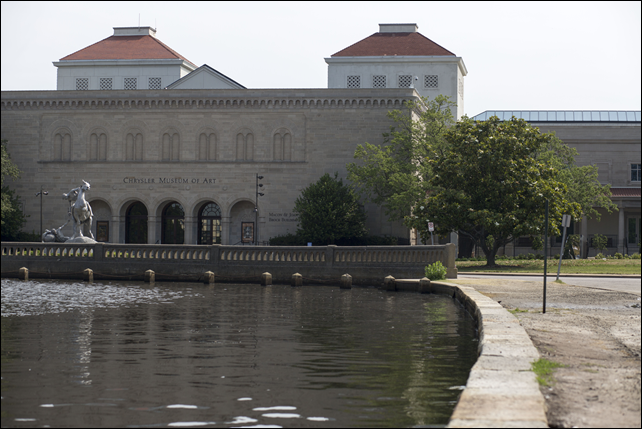
(Washington Post) – At high tide on the small inlet next to Norfolk’s most prestigious art museum, the water lapped at the very top of the concrete sea wall that has held it back for 100 years.
It seeped up through storm drains, puddled on the promenade and spread, half a foot deep, across the street, where a sign read, “Road Closed.” The sun was shining, but all around the inlet people were bracing for more serious flooding. The Chrysler Museum of Art had just completed a $24 million renovation that emptied the basement, now accessible only by ladder, and lifted the heating and air-conditioning systems to the top floor. A local accounting firm stood behind a homemade barricade of stanchions and detachable flaps rigged to keep the water out. And the congregation of the Unitarian Church of Norfolk was looking to evacuate.
“We don’t like being the poster child for climate change,” said the Rev. Jennifer Slade, who added that the building, with its carved-wood sanctuary and soaring flood-insurance rates, would soon be on the market for the first time in four decades. “I don’t know many churches that have to put the tide chart on their Web site” so people know whether they can get to church.
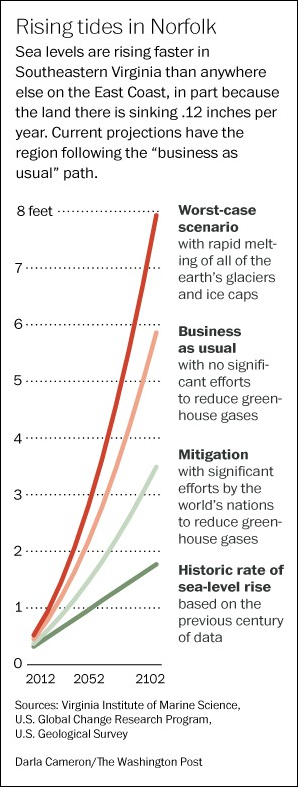
On May 6, the Obama administration released the third National Climate Assessment, and President Obama proclaimed climate change no longer a theory; its effects, he said, are already here. This came as no surprise in Norfolk, where normal tides have risen 11 / 2 feet over the past century and the sea is rising faster than anywhere else on the East Coast.
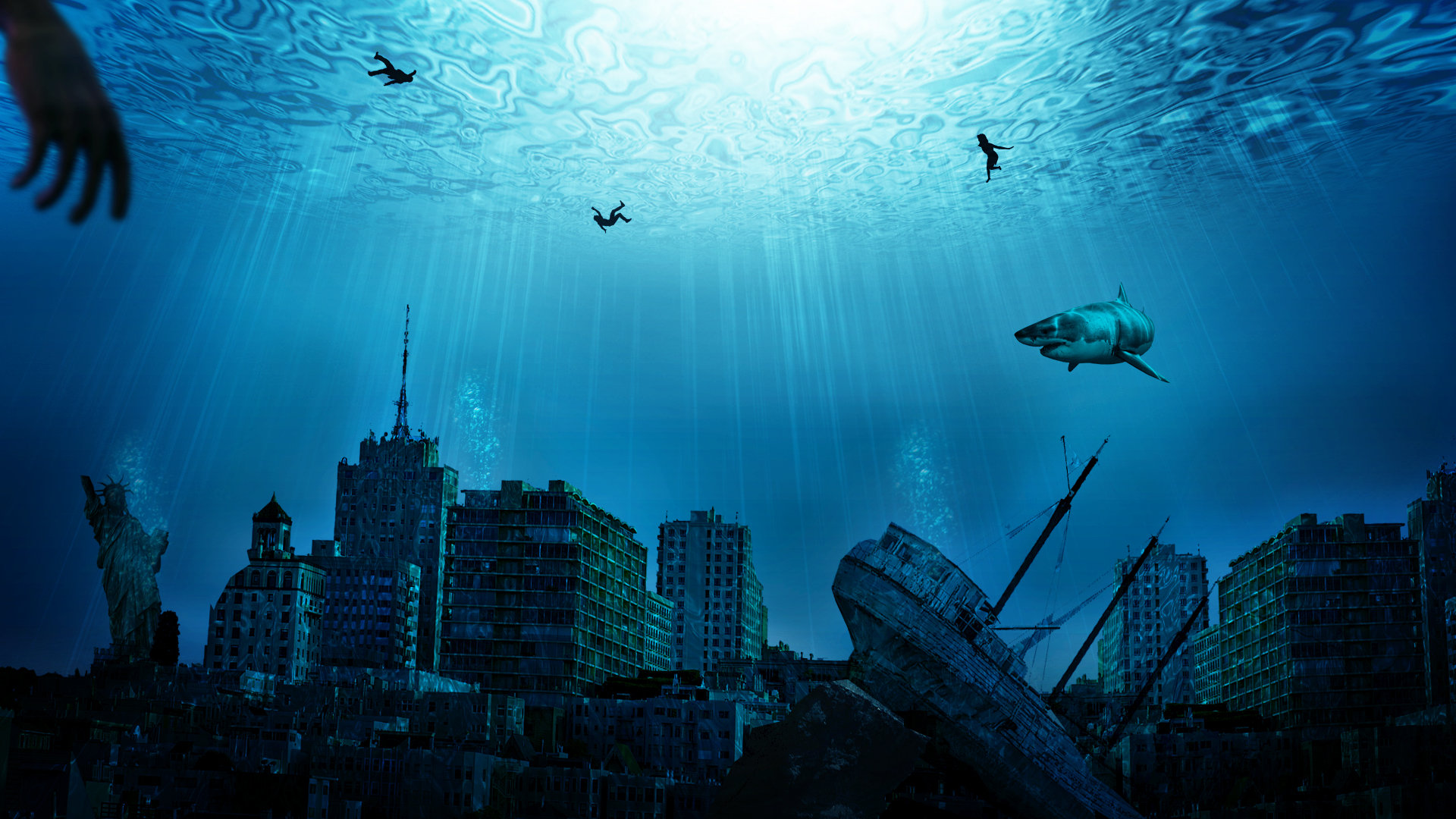
Perhaps this futuristic picture of Norfolk is a little dramatic, but then again maybe not. One thing is for certain though no one wants to be a "poster child" for climate change. Particularly when the storms unleash their furies.
Marco Rubio says human activity isn't causing climate change
By Brian Bennett (Los Angeles Times) – Sen.
Marco Rubio of Florida, a GOP star and possible 2016 presidential
contender, does not believe human activity is causing climate change, he
said Sunday. “I do not believe that human activity is causing
these dramatic changes to our climate the way these scientists are
portraying it,” Rubio said on ABC's This Week.
"I do
not believe that the laws that they propose we pass will do anything
about it, except it will destroy our economy,” he added. A
National Climate Assessment released by the White House last week found
that Rubio’s home state of Florida is one of the most vulnerable to
rising sea levels and changes in temperatures and storm patterns.
President Obama has proposed several new regulatory programs to reduce
emissions of carbon dioxide, which most scientists say are the chief
cause of a warming global climate.
Who do you believe?
Rubio said he doesn’t agree that actions humans take today could affect how the climate is changing. “Our
climate is always changing,” Rubio said. “And what they have chosen to
do is take a handful of decades of research and say that this is now
evidence of a longer-term trend that's directly and almost solely
attributable to manmade activities.”
Rubio, who was swept into
the Senate in 2010 on a wave of support from tea-party Republicans in
Florida, just completed a swing through New Hampshire, the first state
that will hold a presidential primary in the 2016 race for the White
House. Although he has been a rising star in the GOP, his popularity
among conservatives slipped last year after conservative commentators
battered him for his role in the Senate's passage of immigration reform
legislation last year. (The Republican-controlled House has refused to
take up the bill.) Rubio’s denial that human activity is to
blame for climate change could stand him in good stead with the
conservatives who dominate some Republican nomination contests, although
it puts him at odds with the views of most Americans. Read More
By Chris Wickham; Editing by Janet Lawrence LONDON
(Reuters) – Scientists are predicting the disappearance of another vast
ice shelf in Antarctica by the end of the century that will accelerate
rising sea levels.
The Filchner-Ronne Ice Shelf fringing the
Weddell Sea on the eastern side of Antarctica has so far not seen ice
loss from global warming and much of the observation of melting has
focused on the western side of the continent around the Amundsen Sea.
But new research from the Alfred Wegener Institute for Polar and Marine
Research in Germany says the 450,000-sq-km ice shelf is under threat. "According
to our calculations, this protective barrier will disintegrate by the
end of this century," said Dr Harmut Hellmer, lead author of the study,
published in the journal Nature this week. The huge ice
shelves that float on the seas fringing Antarctica provide a buffer
against warming waters eating away at the base of the much larger
glaciers behind them that sit on the land. "Ice shelves are like corks in the bottles for the ice streams behind them," said Hellmer. "They reduce the ice flow. "If,
however, the ice shelves melt from below, they become so thin that the
dragging surfaces become smaller and the ice behind them starts to
move." Hellmer and his team predict the melting of the
Filchner-Ronne shelf could add up to 4.4 mm per year to rising global
sea levels.